
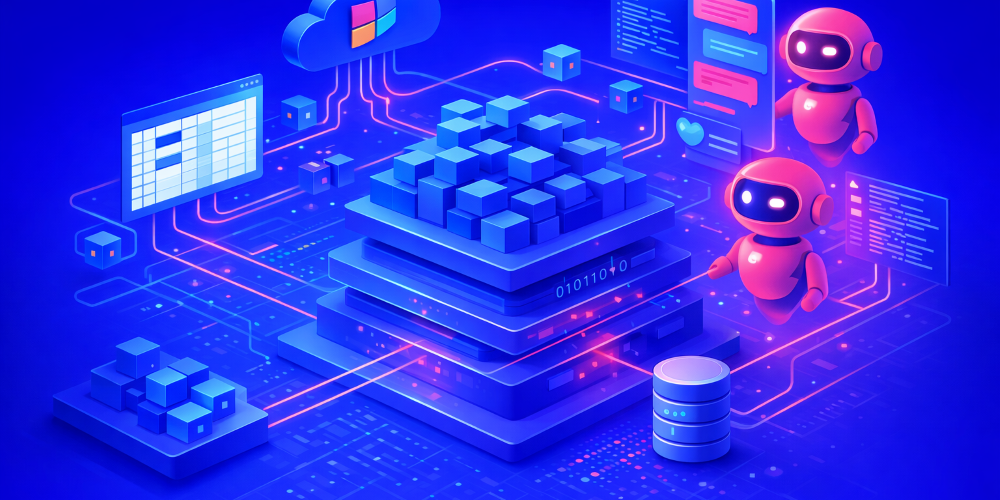
Modernizing ERP Data Architecture with Microsoft Fabric and Copilot Agents
Enterprise Resource Planning (ERP) systems are central to how modern organizations run finance, supply chain, procurement, human resources, and operational processes. However, many businesses still struggle with a familiar problem: critical ERP data is spread across multiple systems, teams, and reporting environments. Finance data may sit in one ERP platform, supply chain information in another, customer records in a CRM system, and operational data in legacy applications or external databases. The result is fragmented visibility, inconsistent reporting, and slow decision-making.
For business leaders and IT decision-makers, this is no longer just an architecture issue. It is a business performance issue. Organizations are under pressure to move faster, improve forecasting, reduce operational risk, and make decisions based on current data rather than delayed reports. At the same time, artificial intelligence is changing expectations. Leaders no longer want dashboards alone; they want systems that can explain trends, identify risks, and recommend actions.
That is where Microsoft Fabric, unified data consolidation, and Copilot agents come into play. Together, they offer a practical path for modernizing ERP data architecture. By bringing data from multiple enterprise systems into a single platform and enabling AI-driven interaction with that data, organizations can shift from reactive reporting to real-time, intelligence-led operations.
Why Traditional ERP Data Architectures Struggle
Most ERP environments did not become complex overnight. They evolved over time. New applications were added to support different departments, acquisitions introduced new platforms, and separate reporting tools were deployed to meet urgent business needs. What many companies now have is not a single ERP landscape, but a patchwork of systems connected through custom integrations, scheduled data pipelines, and isolated analytics tools.
This creates several problems. The first is data silos. When finance, supply chain, sales, and operations all work from different systems, it becomes difficult to get a complete and consistent view of the business. Different teams often produce different numbers for the same business question because they are pulling data from different places or using different logic.
The second issue is reporting delay. Traditional architectures usually depend on ETL processes that extract data from source systems, transform it in staging environments, and load it into warehouses or reporting databases. These pipelines often run on schedules, which means the data available to decision-makers may already be hours or even days old.
A third problem is platform sprawl. Many organizations manage separate tools for integration, storage, transformation, analytics, and visualization. That increases maintenance overhead and makes governance harder. Security policies, data definitions, and access rules become inconsistent across platforms.
Disconnected BI environments also limit AI adoption. If enterprise data is fragmented and duplicated across multiple systems, AI tools cannot reliably generate meaningful insights. Before organizations can use AI effectively, they need a clean, governed, and unified data foundation.
Microsoft Fabric as a Unified Data Platform
Microsoft Fabric addresses this problem by bringing together data integration, engineering, storage, analytics, and visualization in one platform. Instead of forcing organizations to stitch together several technologies, Fabric provides a unified environment that simplifies how enterprise data is managed and used.
At the center of Fabric is OneLake, which acts as a single, logical data lake for the organization. It allows businesses to store and access data from multiple systems in one place, reducing unnecessary duplication and creating a more consistent foundation for enterprise reporting and analytics.
Data Factory in Fabric supports data ingestion from ERP systems, SaaS applications, operational databases, and external sources. This allows organizations to pull together information from platforms such as SAP, Oracle ERP, Microsoft Dynamics, Salesforce, and other enterprise applications.
Data Engineering capabilities support large-scale transformation and preparation of data. This is where raw source data can be standardized, cleaned, enriched, and aligned with business rules. For example, customer records from multiple systems can be matched, financial entities can be standardized, and operational data can be reshaped for analysis.
Data Warehouse capabilities make it possible to structure business-ready data for reporting and query workloads, while Power BI provides reporting and dashboarding directly on top of the same integrated environment. This reduces the gap between data preparation and business consumption.
The practical benefit is clear: Fabric allows organizations to build a single source of truth for enterprise data rather than maintaining disconnected reporting environments across departments.
Consolidating ERP and Enterprise Data
ERP modernization is not only about moving data into a new platform. It is about consolidating data in a way that makes it useful, trustworthy, and scalable. That means bringing together information from ERP, CRM, supply chain systems, operational applications, IoT platforms, and external sources into a unified model.
For example, a business may use SAP for finance, Dynamics for regional operations, Salesforce for customer engagement, and a separate manufacturing execution system for plant data. Without consolidation, each function sees only part of the story. Finance may understand margin movement but not the operational causes. Supply chain may see stock shortages but not the revenue impact. Sales may track customer demand without knowing whether production can keep up.
Using Fabric, organizations can ingest these data streams into a common environment. Once there, transformation processes can align dimensions such as customer, supplier, product, business unit, and location. This creates a unified enterprise data model that supports cross-functional reporting and analysis.
Governance is a critical part of this process. A modern ERP data architecture must ensure data quality, security, lineage, and controlled access. Fabric supports governance by enabling centralized policies, consistent access controls, and clearer visibility into how data is used. That matters because consolidating data without governance simply creates a larger mess.
When done properly, consolidation gives the business something it usually lacks: a complete, shared, and trusted view of operations.
Using Copilot Agents for Business Intelligence and Automation
Once enterprise data is consolidated, the next step is making that data easier to use. That is where Copilot agents become valuable. Instead of requiring business users to depend entirely on analysts or manually navigate dashboards, Copilot agents allow users to interact with enterprise data using natural language.
A finance Copilot agent, for example, can review actual versus budget performance and generate variance explanations. Rather than simply showing that costs increased, it can point to the likely drivers, such as freight expenses, supplier cost increases, or production inefficiencies.
A supply chain Copilot agent can monitor inventory trends, supplier lead times, and demand signals to identify risk before it becomes a disruption. It can flag potential shortages, highlight slow-moving stock, and suggest actions based on current operating conditions.
Sales and customer teams can use Copilot agents to analyze order patterns, customer profitability, regional demand shifts, and account activity. Instead of waiting for weekly reporting cycles, teams can ask direct business questions and receive immediate, data-backed answers.
At the executive level, Copilot agents can synthesize insights across multiple functions. A leadership team could ask why margins are under pressure in a specific market, what operational risks are increasing this quarter, or which product lines are outperforming expectations. The value is not just speed. It is accessibility. AI makes enterprise data more usable for decision-makers who do not have time to work through multiple systems or interpret fragmented reports.
Business Benefits of a Modern ERP Data Architecture
The combination of Microsoft Fabric, unified data consolidation, and Copilot agents delivers practical business value.
Faster reporting and analytics: With data consolidated into a single platform, reporting cycles are shortened and users get access to fresher information.
Reduced integration complexity: Instead of managing multiple disconnected tools and custom pipelines, organizations can work within a more integrated architecture.
AI-powered decision support: Copilot agents help users move from static dashboards to interactive insight generation and guided analysis.
Stronger collaboration: Business and IT teams work from the same data foundation, which reduces disputes over numbers and improves alignment.
Better governance and security: Centralized data management makes it easier to apply consistent controls, policies, and quality standards.
These are not cosmetic improvements. They directly affect how quickly a business can respond to market changes, operational risk, and customer demand.
Real-World Use Case Scenario
Consider a manufacturing company operating across multiple regions. Finance data is managed in ERP, sales activity sits in CRM, and plant performance data comes from operational systems on the factory floor. Previously, each department produced its own reports, and leadership had no consistent real-time view of performance. Finance could see cost increases, but not the operational causes. Operations could see plant delays, but not the revenue impact. Sales could see customer demand, but not inventory constraints.
By adopting Microsoft Fabric, the company consolidates ERP, CRM, and operational data into OneLake. Data pipelines ingest information from all core systems, while transformation processes align products, customers, plants, and financial entities into a shared data model. Power BI dashboards provide live visibility into revenue, margins, production efficiency, and supply chain performance.
On top of this foundation, Copilot agents are introduced. Finance uses an agent to generate automated variance analysis and explain monthly cost movement. Supply chain managers use an agent to flag inventory risks and supplier delays. Sales leaders use an agent to identify customer demand shifts and declining order trends. Executives receive AI-generated summaries that combine operational, financial, and customer insights into one view.
The result is a measurable change in how the business operates. Reporting becomes faster, insight becomes more actionable, and leadership decisions are based on current conditions rather than historical snapshots.
Conclusion
Organizations cannot keep treating ERP data as if it belongs only inside transactional systems. That model is too slow, too fragmented, and too limited for modern business needs. Leaders need a unified view of operations, finance, supply chain, and customer activity. They also need AI tools that can turn enterprise data into usable insight without adding more technical complexity.
Microsoft Fabric provides the platform to consolidate ERP and enterprise data into a single, governed foundation. Copilot agents make that data easier to access, interpret, and act on. Together, they give organizations a practical way to modernize ERP data architecture and move beyond static reporting toward AI-driven business intelligence.
The direction is obvious. Businesses that unify their data and operationalize AI will make faster and better decisions. Those that stay stuck with fragmented ERP architecture will keep losing time reconciling data instead of using it.