
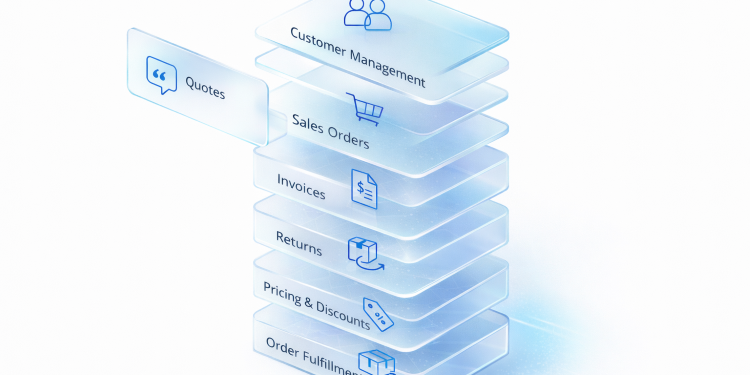
This blog is for CEOs, business owners, sales leaders, operations managers, customer service teams, finance teams, and ERP decision-makers who want a more structured way to manage customer transactions from quote to order to invoice. Microsoft’s Business Central sales documentation covers customer setup, sales quotes, sales orders, invoices, shipments, approvals, and analytics, making it relevant to both frontline teams and business leadership.
Key takeaways
- Business Central helps manage customer records, quotes, orders, shipments, invoicing, and sales reporting in one connected ERP flow.
- It improves sales operations by aligning sales, fulfillment, finance, and customer communication.
- It also supports Shopify integration, helping businesses synchronize orders, inventory, and customer data more effectively.
Introduction
Sales management is not just about creating an order or sending an invoice. In reality, it spans customer records, pricing, fulfillment, shipping, billing, and follow-through. When those pieces are disconnected, businesses end up with order delays, customer issues, manual rework, and poor visibility.
Microsoft Dynamics 365 Business Central helps solve that by connecting commercial activity with operational execution and financial outcomes. It gives businesses a more structured way to manage the full flow from customer record to quote, order, shipment, invoice, and reporting.
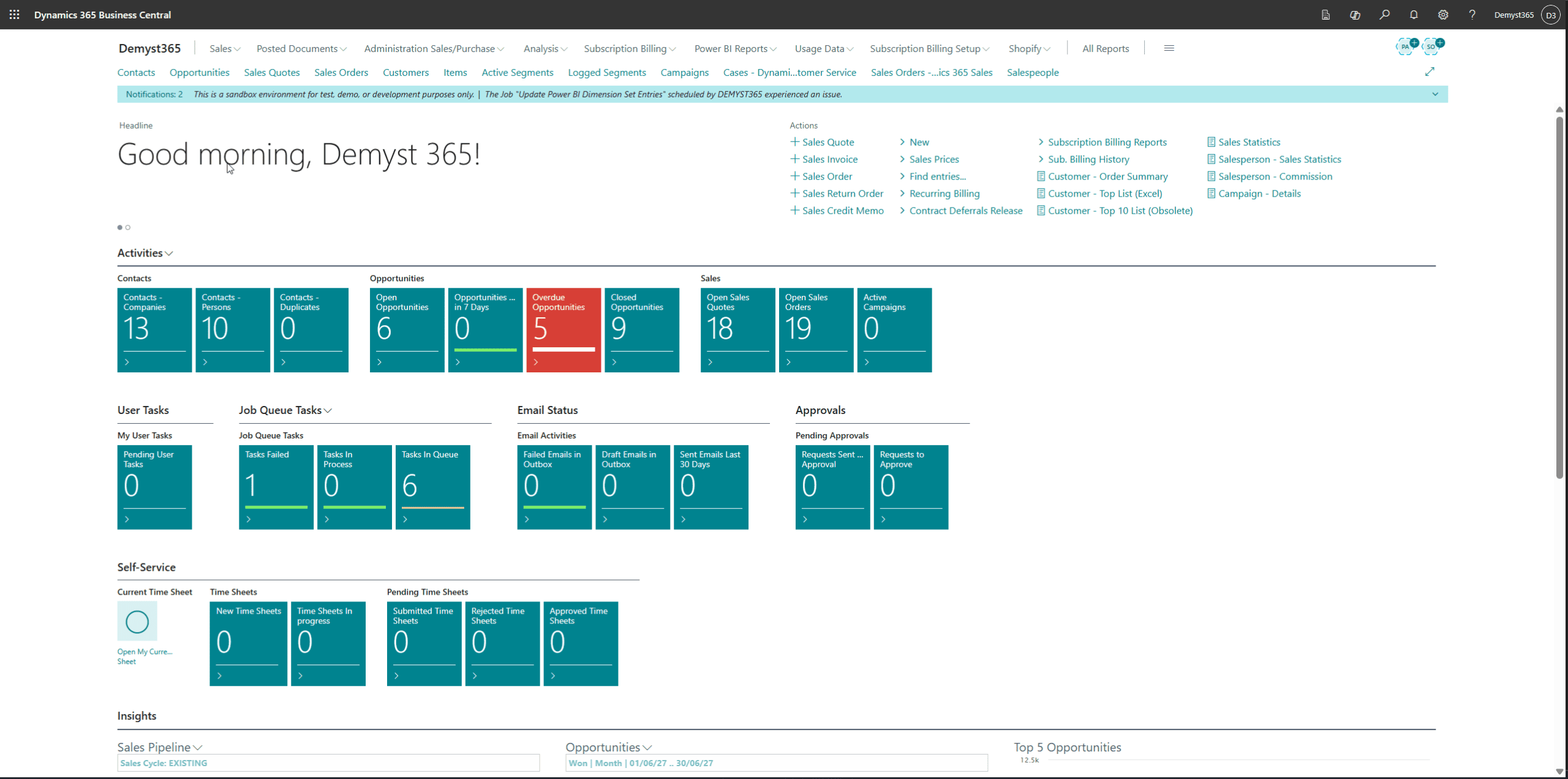
What sales management in Business Central actually covers
Business Central supports the operational side of sales through customer setup, quotes, orders, shipment handling, invoicing, returns, approvals, and analytics. It also supports more advanced scenarios such as partial shipments, drop shipments, blanket sales orders, and order promising.
That means Business Central is not just recording sales transactions. It is helping businesses manage how customer demand turns into operational action and financial follow-through.
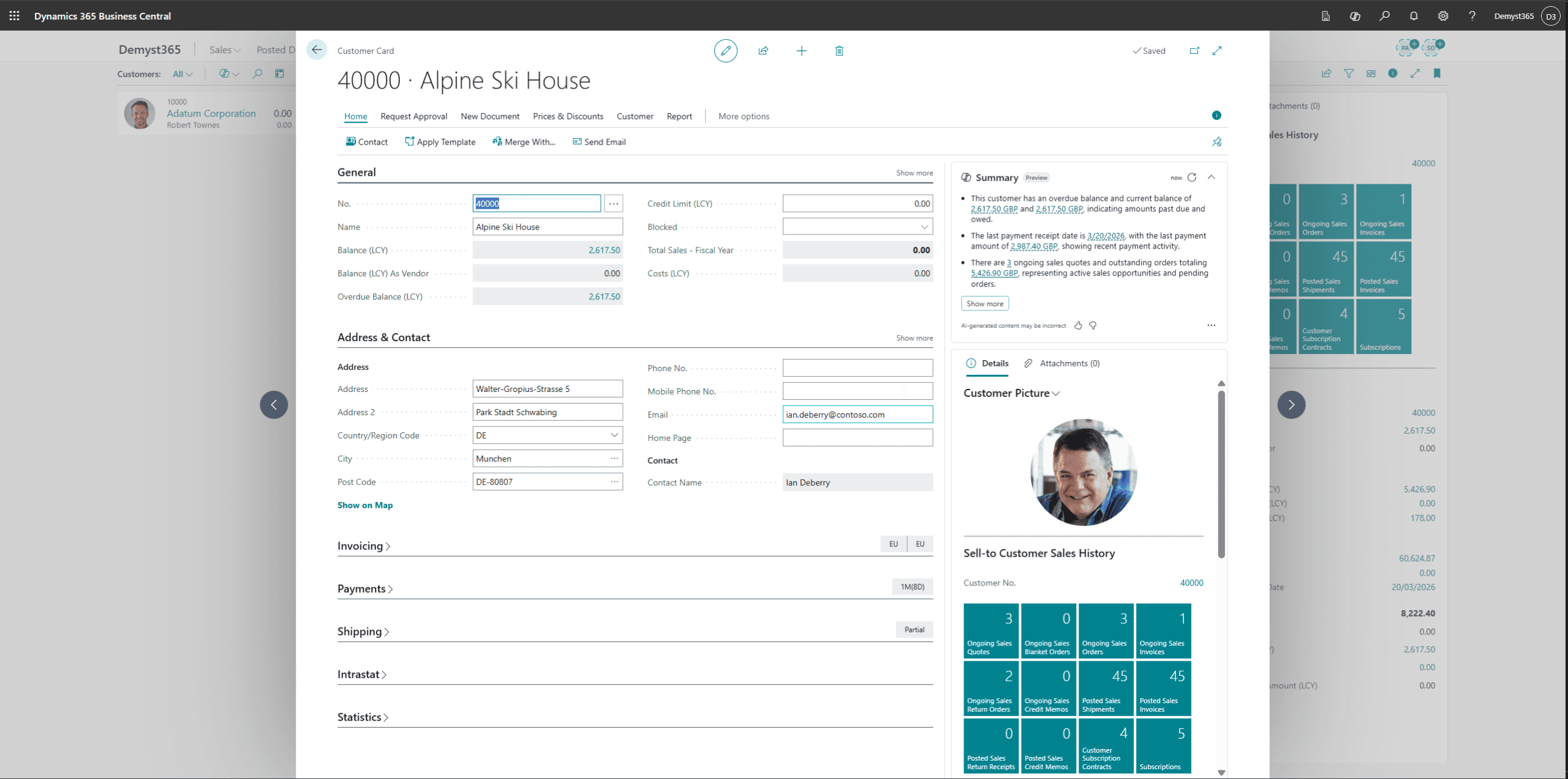
Customer records and customer setup
Every sales process begins with the customer record. Business Central allows businesses to maintain customer information, payment terms, shipment methods, prices, discount groups, and related sales setup in one place.
This improves consistency across the business. Sales teams work from cleaner customer data, operations teams have better clarity on fulfillment requirements, and finance teams benefit from more reliable invoicing and posting behavior.
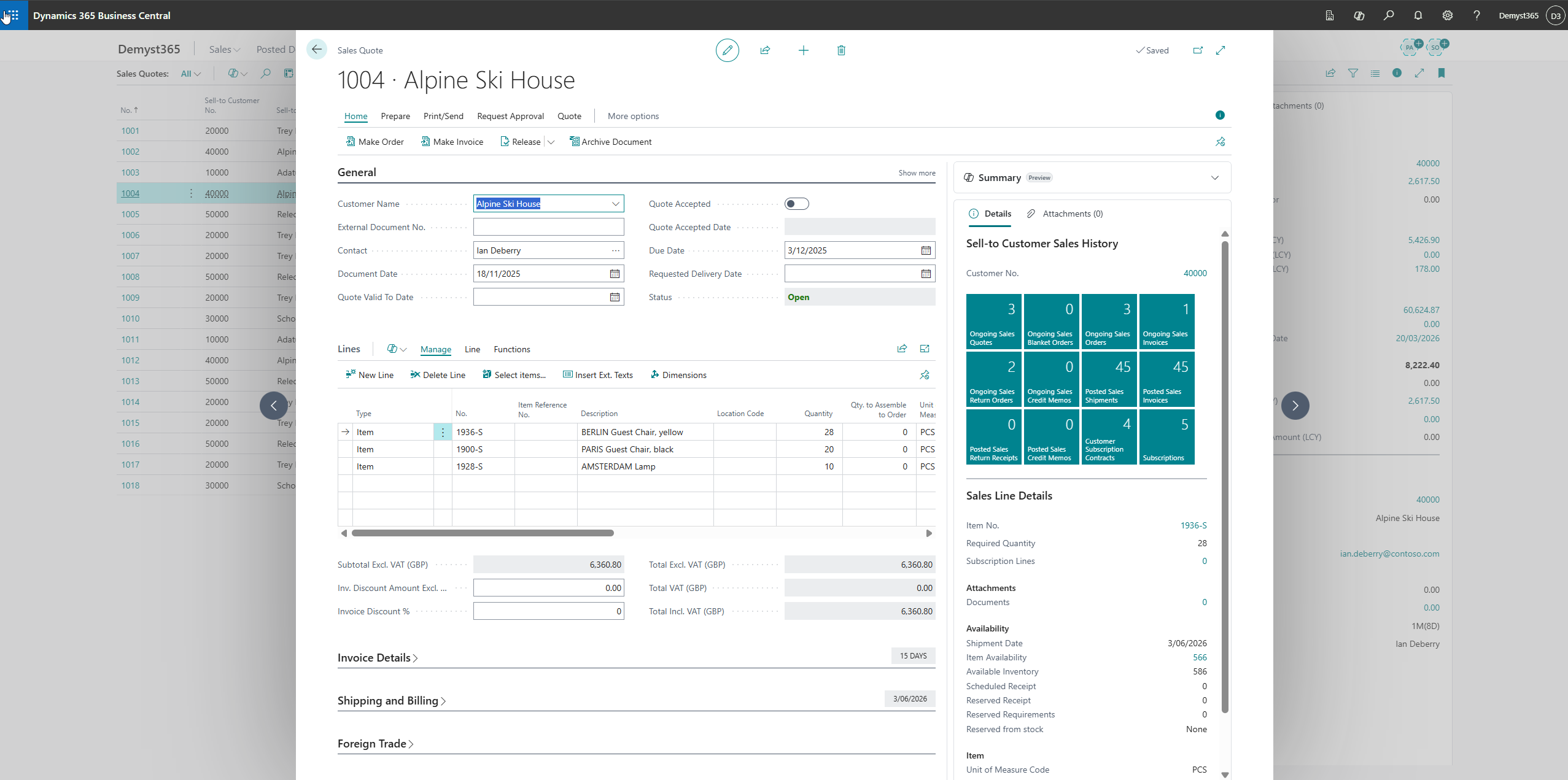
Sales quotes and controlled commercial process
Sales quotes help businesses move from customer interest to structured commercial activity. Instead of relying on emails or disconnected spreadsheets, quotes inside Business Central create a formal step that can be converted directly into a sales order or invoice.
This improves quote-to-order speed, reduces manual re-entry, and gives teams a clearer commercial record of what was offered and agreed.
Sales orders and execution discipline
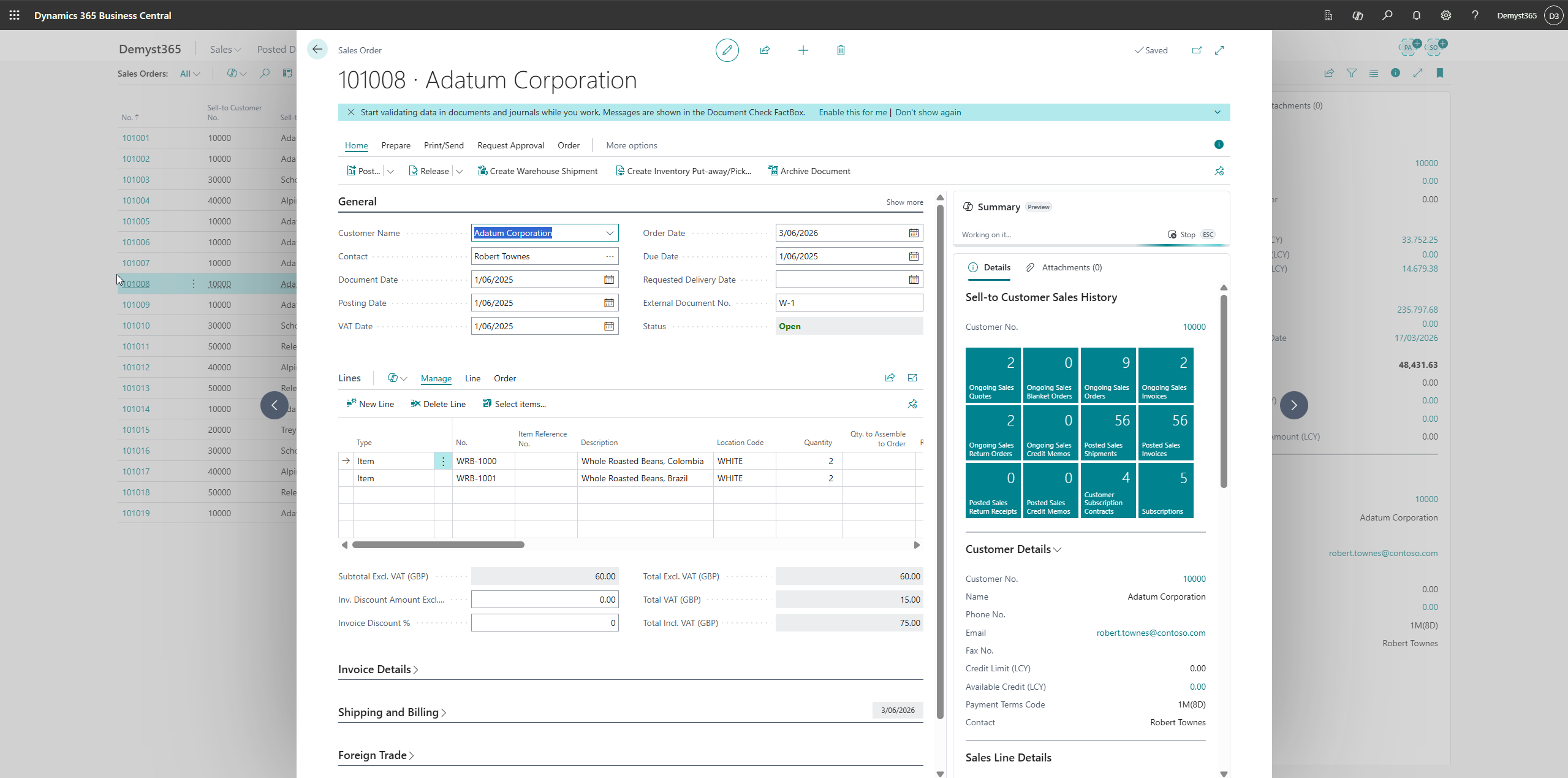
Sales orders are where customer commitment becomes operational responsibility. In Business Central, sales orders connect items, quantities, pricing, shipment expectations, fulfillment details, and invoicing flow in one process.
That creates a stronger handoff between sales, warehouse, customer service, and finance. It also gives leadership better visibility into whether sales activity is turning into reliable execution.
Fulfillment, shipping, and customer follow-through
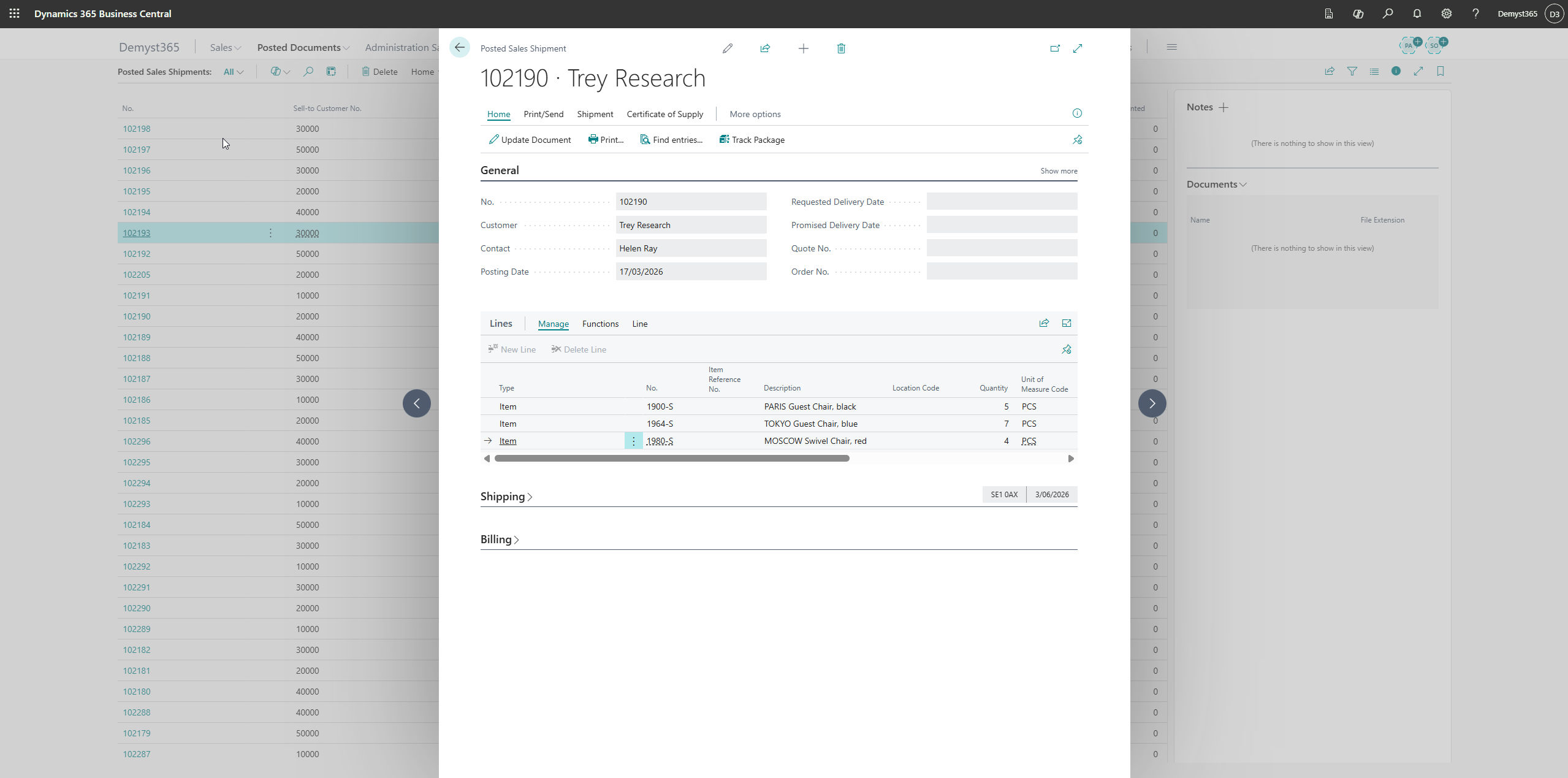
Sales success is not just about taking orders. It is about delivering on them. Business Central supports shipping activity, partial shipments, drop shipments, and order promising so teams can manage actual fulfillment more clearly.
This helps reduce the gap between what sales promises and what operations can deliver. It also improves customer communication because teams can work from real shipment and order status instead of disconnected updates.
Invoicing and financial handoff
Once sales execution is completed, Business Central helps convert that activity into structured invoicing and customer ledger entries. This improves the transition from customer transaction to finance, reducing billing delays and manual reconciliation issues.
For finance teams, that means a cleaner path from commercial activity to posted transactions. For business owners, it means stronger control over how revenue activity is reflected in the financial system.
Shopify integration and e-commerce sales operations
For businesses selling online, Shopify integration is an important part of the picture. Business Central’s Shopify Connector helps synchronize orders, stock, and customer information between Shopify and ERP.
This is valuable because e-commerce operations often create separate process issues around order flow, stock accuracy, and financial visibility. With Business Central and Shopify working together, businesses can manage online sales with better coordination across commerce, fulfillment, and finance.
Useful sales operations benefits in Business Central
- Better customer record consistency across sales, operations, and finance
- Cleaner quote-to-order flow with less re-entry
- Improved order execution visibility across departments
- Stronger fulfillment coordination through shipment and order-promising support
- Cleaner handoff from sales to invoicing and customer ledger posting
- Better customer communication through clearer order and delivery visibility
- More reliable e-commerce execution through Shopify synchronization
- Improved reporting and sales insight through built-in analytics
Business benefits by audience
For CEOs and business owners
- Better visibility into the full customer transaction lifecycle
- Improved alignment between sales promises and operational delivery
- More dependable commercial reporting
- Better scalability as sales volume grows
For sales leaders
- More structured quote, order, and approval processes
- Better coordination with fulfillment and invoicing
- Clearer operational visibility into what has actually moved forward
- Stronger control over exceptions and high-impact transactions
For operations and customer service teams
- Better handoff from order entry to shipment
- More realistic delivery communication
- Clearer visibility into order and fulfillment status
- Reduced friction between departments
For finance teams
- Cleaner path from sales activity to invoice and customer ledger entries
- Better billing accuracy
- Less manual reconciliation between sales and finance
- More dependable transaction visibility for reporting
For e-commerce businesses
- Better coordination between Shopify and ERP
- Improved stock synchronization
- Better management of customer and order data across channels
- Faster fulfillment and cleaner downstream finance handling
Video overview
Watch this quick walkthrough to see how Business Central supports customer records, quotes, sales orders, fulfillment, and invoicing:
Practical leadership takeaway
Business Central helps sales become more operationally dependable. It does not just record what was sold. It connects customer records, quotes, orders, fulfillment activity, invoicing, analytics, and e-commerce integration in a way that supports cleaner execution and stronger business visibility.
How INFOC can help
At INFOC, we help businesses implement, optimize, integrate, and extend Microsoft Dynamics 365 Business Central so sales operations work more effectively from customer setup and quoting to fulfillment, invoicing, reporting, and commerce integration.
That includes support across ERP and CRM Consulting, Enterprise Integration, Dynamics 365 CE, Technology Consulting, and analytics support with Microsoft Power BI.